
Why Texas Data Centers Are Specifying PVC And What Building Owners Need to Know
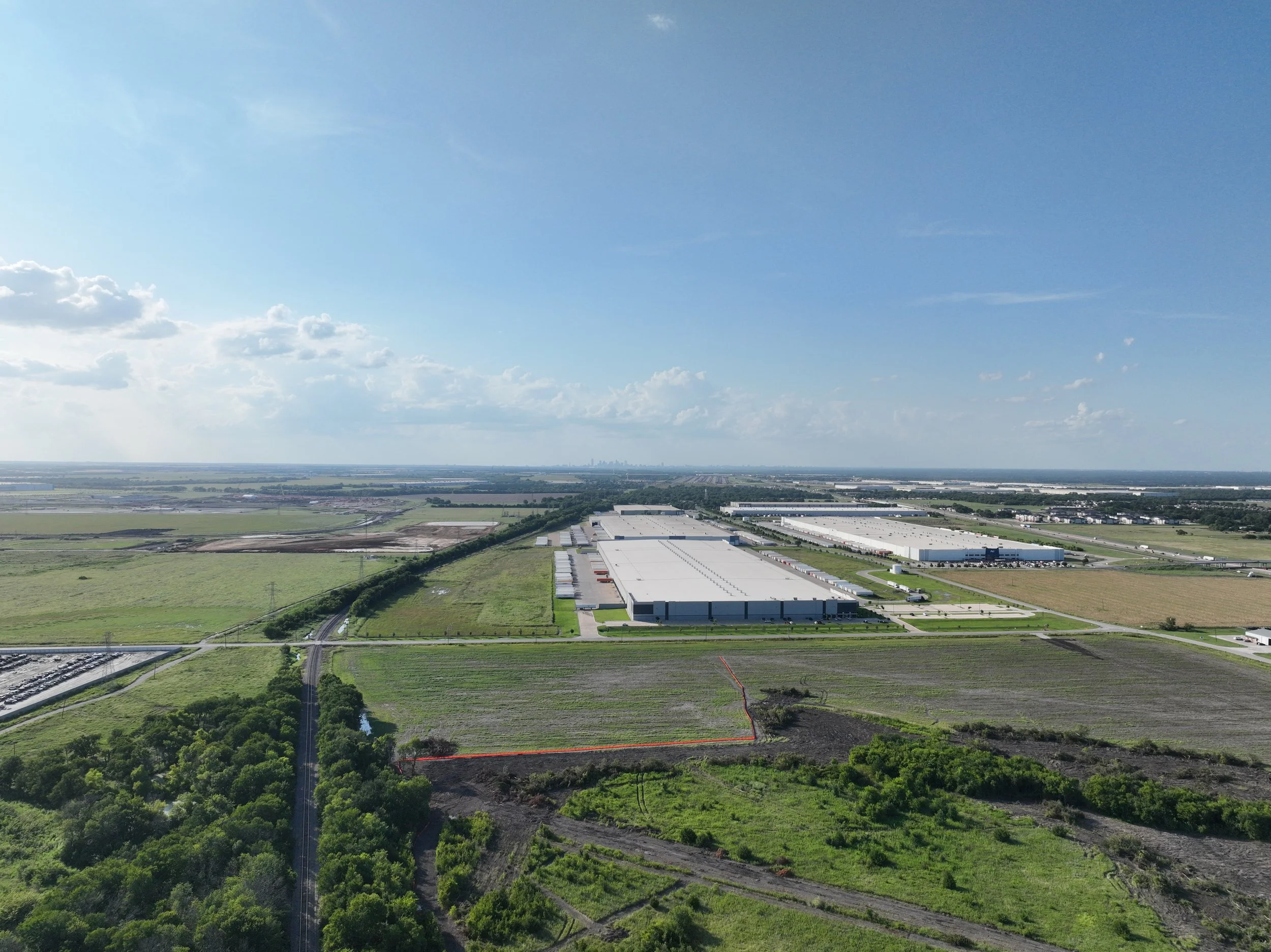
Texas is the second-largest data center market in the United States. Dallas-Fort Worth alone has more than 184 operational facilities running over 9,000 megawatts of IT capacity, with Austin rapidly scaling behind it. That's billions of dollars in computing infrastructure sitting under flat roofs in one of the most punishing climates in the country.
Here's why the next generation of Texas data center roofs should be PVC from IB Roof Systems, and what building owners and GCs need to understand about the material spec before the next re-roof cycle begins.
The Texas Data Center Climate Problem
Data center roofs in Texas face a combination of environmental stressors that most other markets don't deal with simultaneously.
Hail. North Texas averages 14 hail days per year; more than triple the national average. Peak hailstones regularly exceed two inches during spring supercell season between March and June. A single puncture above an electrical room or battery plant can cause millions in downtime losses. This isn't a maintenance issue. It's a business continuity risk.
Extreme heat. Summer rooftop surface temperatures on dark or aged membranes reach 180°F in DFW. That kind of sustained thermal cycling accelerates seam fatigue, insulation board warp, and membrane embrittlement. A roof system designed for Ohio doesn't survive a decade in Dallas.
Chemical exposure. Data center rooftops concentrate generator exhaust, battery off-gassing from UPS systems, refrigerant leaks from cooling equipment, and cleaning solvents used during mechanical maintenance. The membrane is continuously exposed to chemical compounds that many roofing materials aren't formulated to handle.
Wind uplift. Open-site hyperscale campuses in the DFW growth corridors: Ellis County, Johnson County, Alliance require FM 1-120 or FM 1-150 wind uplift ratings on corner and perimeter zones. The membrane and attachment system have to be engineered for these loads, not just the FM 1-90 minimum.
A Texas data center roof has to handle all four of these simultaneously, continuously, for 20+ years. That's the spec that should drive material selection.
Chemical Resistance That's Built In, Not Added On
PVC's chemical resistance is inherent to its polymer structure. It handles grease, oils, generator exhaust compounds, battery acid off-gassing, and industrial solvents without membrane degradation. This isn't a coating or treatment. It's the chemistry of the material itself.
TPO does not have this inherent resistance. Under continuous chemical exposure, which is the reality on any data center roof with rooftop mechanical systems — TPO membranes can experience plasticizer migration, surface crazing, and accelerated seam degradation. On a building where a single leak is a catastrophic event, that gap in chemical performance is hard to justify.
Fire Performance Without Compromise
IB PVC membranes carry a Class A fire rating and are self-extinguishing when the flame source is removed. PVC achieves this through its material chemistry, no additional fire-retardant coatings or treatments required.
On a Texas data center where fire is a catastrophic-level risk and rooftop generator fuel lines create permanent ignition proximity, a membrane that's inherently fire-resistant removes a variable from the risk equation.
Re-Weldability Over a 30-Year Roof Life
Both TPO and PVC use heat-welded seams. But here's the difference that matters over time: PVC seams can be re-welded and repaired decades after installation because the material remains thermally responsive. TPO seams become progressively harder to rework as the membrane ages and the polymer cross-links.
Texas data centers are not static buildings. Cooling equipment gets upgraded. New generator sets get added. Conduit runs get rerouted. Every modification touches the roof membrane. The ability to weld new flashing details into an existing PVC membrane — 15 or 20 years into the roof's life — is a practical advantage that shows up on every service call.
No Ponding Water Warranty Exclusion
IB Roof Systems' warranty program does not exclude ponding water. This is unusual in the industry and directly relevant to data center roofs.
Data centers carry extraordinary rooftop equipment loads — 35 to 60 pounds per square foot in mechanical zones. That equipment creates complex drainage paths and localized areas where water can pond after heavy rain. In North Texas, where spring storms routinely drop two to four inches in under an hour, ponding is not a design failure — it's a predictable condition.
How Hail-Impact Ratings Work on Texas Data Centers
FM Approvals Standard 4470 governs impact resistance for single-ply membranes. Class 4 is the highest classification — the membrane must survive a 2-inch steel ball dropped from 20 feet without puncturing.
Insurance carriers including FM Global, Zurich, and AIG offer premium reductions of 10 to 25 percent on Class 4 rated assemblies. For a data center operator running 200,000+ square feet of roof, that premium reduction can offset a meaningful portion of the membrane cost difference between standard and premium specifications.
IB PVC in 80-mil thickness over a quality cover board delivers the impact resistance and puncture protection that Texas data center insurance underwriters are looking for. Combined with the membrane's ability to be heat-weld repaired if damage does occur — without adhesives or patches that degrade over time — it's a system that satisfies both the insurer and the maintenance team.
The Re-Roof Cycle: Why 2026–2030 Is the Window
The majority of DFW data center roofing work in 2026 is re-roofing, not new construction. Facilities commissioned between 2005 and 2015 are reaching the end of their original 15- to 20-year TPO warranties. Insurance carriers are demanding upgrades to Class 4 hail-impact ratings and reflective white surfaces.
This re-roof cycle is the decision point. Building owners can replace aging TPO with new TPO and reset the same clock — or they can upgrade to a PVC system that addresses the chemical resistance, fire performance, and re-weldability gaps that the original TPO spec left open.
For owners evaluating this decision, the cost comparison matters. PVC runs $3 to $5 per square foot more than TPO at the material level. On a 50,000 square foot data center, that's $150,000 to $250,000 in additional material cost. Against a building housing $50 million or more in computing infrastructure with SLA penalties measured in thousands of dollars per minute of downtime, that premium buys measurable risk reduction.
The IB Roof Systems Advantage on Texas Data Centers
Closed contractor network. IB only sells through authorized contractors who have been vetted, trained, and assigned a status level based on proven installations. On a data center where every person on the roof is credentialed, tracked, and subject to NDAs and background checks, IB's closed distribution model aligns with how operators already manage facility access.
Field inspections before warranty issuance. For Total System Warranty projects, IB sends a Field Technical Representative to inspect the installation before the warranty activates. Punch lists are generated, corrective work is verified, and only then does the warranty go live. This mirrors the commissioning process that data center operators apply to every other building system.
Factory-fabricated accessories for high-penetration roofs. Data centers have hundreds of roof penetrations: pipe flashings, conduit boots, drain liners, equipment curb flashings. IB manufactures a complete line of pre-fabricated PVC accessories that heat-weld directly to the field membrane, eliminating the field improvisation that causes detail failures on complex roofs.
Narrow rolls for safer installation. IB ships membrane in 3-foot and 6-foot rolls; deliberately narrower than the 10- and 12-foot rolls common in the industry. On a data center roof crowded with HVAC equipment, chiller lines, and pipe supports, narrower rolls are safer for crews to handle, easier to position precisely, and reduce the wind hazard that wide rolls create during installation.
The IB Product Stack for Data Center Specs
For Texas data center applications, IB's relevant product line includes:
PVC Membrane in 60-mil and 80-mil thicknesses with polyester or fiberglass reinforcement. 80-mil is the minimum recommendation for data centers with heavy rooftop equipment and frequent maintenance traffic.
ChemGuard Chemical-Resistant Membrane for generator enclosure areas, battery room exhaust zones, and sections with direct chemical exposure.
Factory-Fabricated Accessories pipe flashings, drain liners, through-wall scuppers, cover strips, non-reinforced detail membrane ; all designed to heat-weld into a monolithic waterproof assembly.
Fluid-Applied Coatings for extending existing data center roof life where full replacement isn't yet required, reducing cost, disruption, and construction timeline on active facilities.
Every component comes from a single manufacturer, is chemically compatible, and falls under one warranty program. No compatibility questions. No finger-pointing between vendors.
What Texas Data Center Operators Should Ask Their Roofing Contractor
Before signing a roofing contract on a Texas data center, building owners and facility managers should get clear answers to these questions:
What membrane manufacturer and thickness is being specified — and why that product over the alternatives?
Is the contractor authorized by the membrane manufacturer at a status level that qualifies for a total system warranty?
Will the manufacturer inspect the completed installation before the warranty is issued?
Does the warranty exclude ponding water?
What hail-impact rating does the proposed assembly carry, and does it meet the insurer's requirements?
How will the project be phased to maintain watertight conditions on the active facility throughout construction?
What chemical exposure is present on the rooftop, and does the proposed membrane resist those specific compounds?
The answers to these questions separate a roofing bid from a roofing spec. On a building where the margin for error is zero, the spec is what matters.
Specifying a data center roof in Texas? CK Materials supplies IB Roof Systems PVC membranes, ChemGuard chemical-resistant membrane, factory-fabricated accessories, and complete system solutions for mission-critical facilities across DFW and beyond. Talk to us before the material order goes in.