
Summer Roofing on Texas Schools: Why General Contractors Start Planning in January
Every general contractor in Texas knows the math. The summer break on most K-12 campuses runs 10 to 12 weeks. Subtract the first week for move-out and the last week for teacher setup, and the actual construction window is closer to 8 weeks. For a commercial roof replacement on a 40,000 square foot school building, that's tight. For a multi-building campus project, it's brutal.
The contractors who get these jobs done on time are not the ones who start thinking about materials in May. They're the ones who locked specifications, staged materials, and confirmed crew schedules months before the last school bell rang.

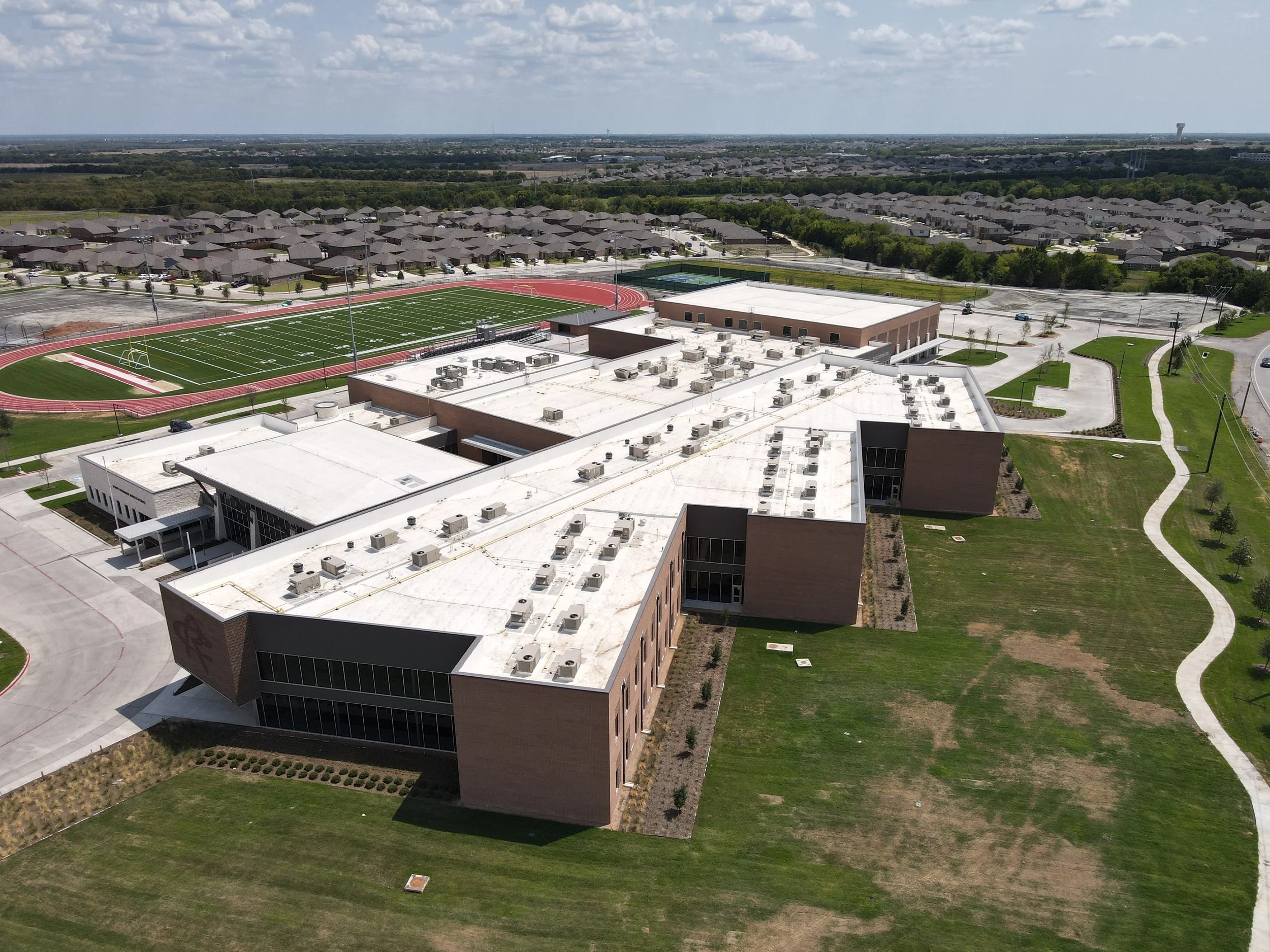
Chism ISD - IB Roof Systems
Why School Roofing Happens in Summer
The reason is simple: you cannot replace a roof over a building full of children during the school year without creating safety, noise, and air quality problems that most districts won't accept. Summer break provides a window where the building is largely unoccupied, contractor access is simplified, and the work can proceed without impacting students or staff.
Texas weather cooperates during this window more than most states. June through August is the driest stretch of the year in most of the state. Extended daylight hours allow longer work days. And while the heat is intense, experienced roofing crews in Texas are accustomed to managing hydration, break schedules, and early-morning starts.
The constraint isn't the weather. It's the calendar.
The Real Timeline Behind a Summer Roof Project
A school roof that gets installed in June was specified and bid months earlier. Here's what the timeline actually looks like for a project that has to be weather-tight before students return in August:
January through February: The roofing consultant or architect completes the specification. Membrane manufacturer, thickness, insulation R-value, attachment method, and warranty tier are all defined. For districts using cooperative purchasing programs like TIPS, the procurement process runs parallel to specification development.
March: The general contractor or roofing subcontractor finalizes the bid. Material quantities are calculated from the specification and project drawings. Long-lead items like custom-fabricated edge metal, specialty flashing components, and specific membrane colors are identified.
April: Material orders go in. This is where the project succeeds or fails. Contractors who wait until April to start ordering from the same manufacturers that every other Texas school project is ordering from will face lead time competition. The smart ones placed their orders in March using confirmed specifications.
May: Materials are staged. Crews are confirmed. The contractor coordinates with the school district's facilities team on access plans, staging areas, and security protocols. Background checks for crew members are processed.
June (Week 1): Mobilization begins as soon as the building is released. Equipment goes up, existing roofing comes off, and the clock starts.
June through July: Full construction. Tear-off, deck inspection and repair, insulation installation, membrane application, flashing details, equipment curb work, drain tie-ins, and edge metal.
Late July to Early August: Punch list, final inspection, manufacturer warranty inspection (if applicable), and demobilization. The building must be weather-tight and construction debris cleared before the district's pre-year maintenance cycle begins.
Why Material Lead Times Matter More on School Projects
When every school district in Texas is trying to get roofing work done in the same 8-week window, demand for materials spikes. Membrane manufacturers, insulation suppliers, and edge metal fabricators are all running at peak capacity from May through July.
Contractors who specify early and order early get their material on time. Contractors who wait get pushed to the back of the production queue. A two-week delay on membrane delivery in June means the project pushes into August, and there is no buffer. Students are coming back whether the roof is finished or not.
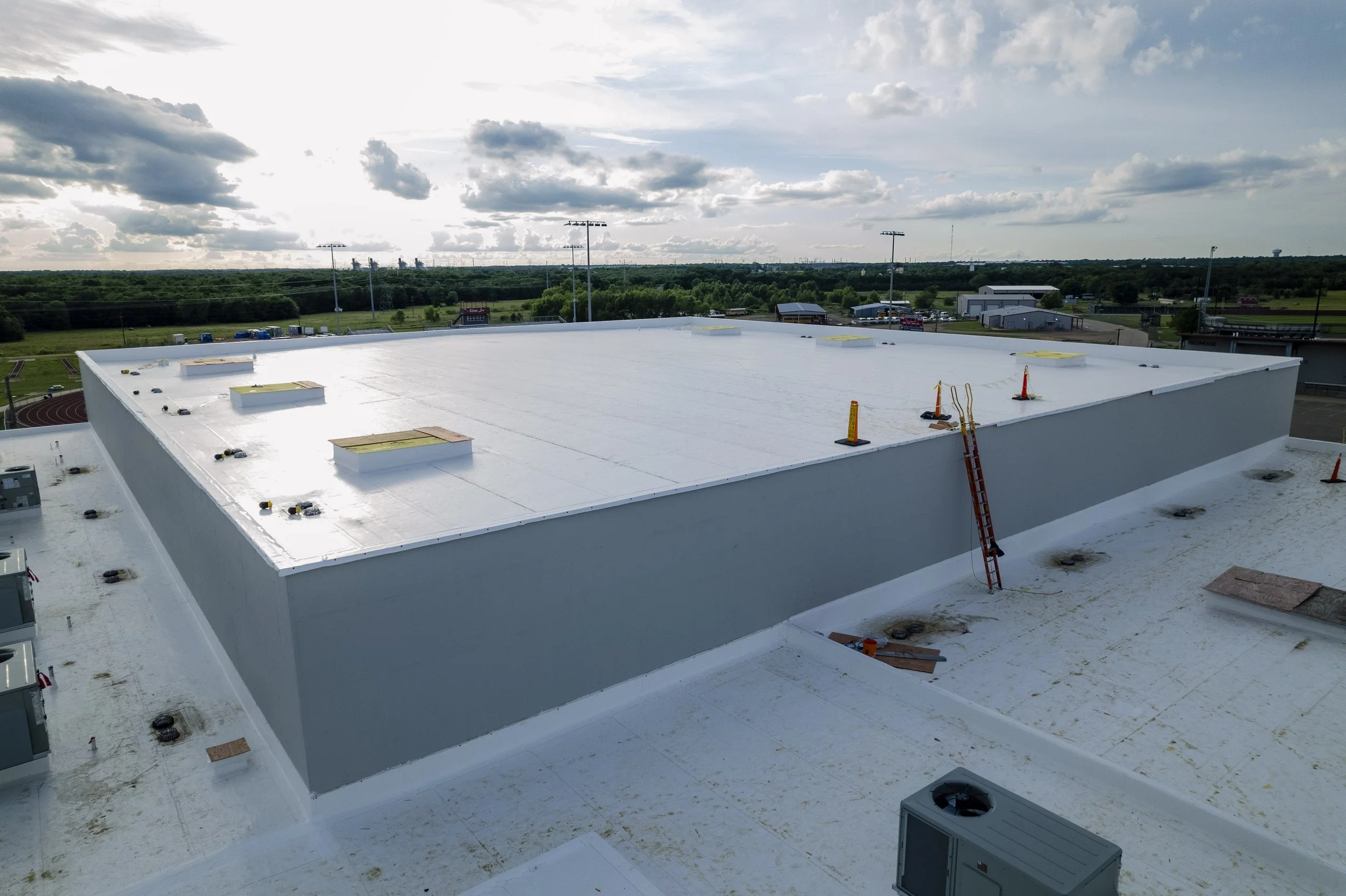
CK Materials works with contractors and school district facilities teams to confirm material availability, lock lead times, and stage product so it's ready when the crew mobilizes. Whether the project calls for IB Roof Systems PVC or TPO, PAC-CLAD metal panels, or edge metal systems, early coordination with the material supplier is what separates a clean August turnover from a project that bleeds into the school year.
The Pace of Summer Installation
Speed matters on summer school projects, but rushing is not the same as working fast. A well-planned project with staged materials, confirmed crews, and a detailed phasing plan can move quickly because there are no delays. The crew shows up, the material is there, the access is clear, and the work proceeds in sequence.
A poorly planned project looks fast at first and then stalls. Material shows up late. A section of wet insulation gets discovered during tear-off and requires a change order. The edge metal was ordered in the wrong finish. Each delay compresses the remaining schedule and increases the risk of quality compromises.
The contractors who consistently deliver summer school projects on time treat material specification and procurement as the first phase of construction, not an afterthought.
Planning a school roofing project for next summer? Contact CK Materials now to start the specification and material staging conversation before the spring rush hits.